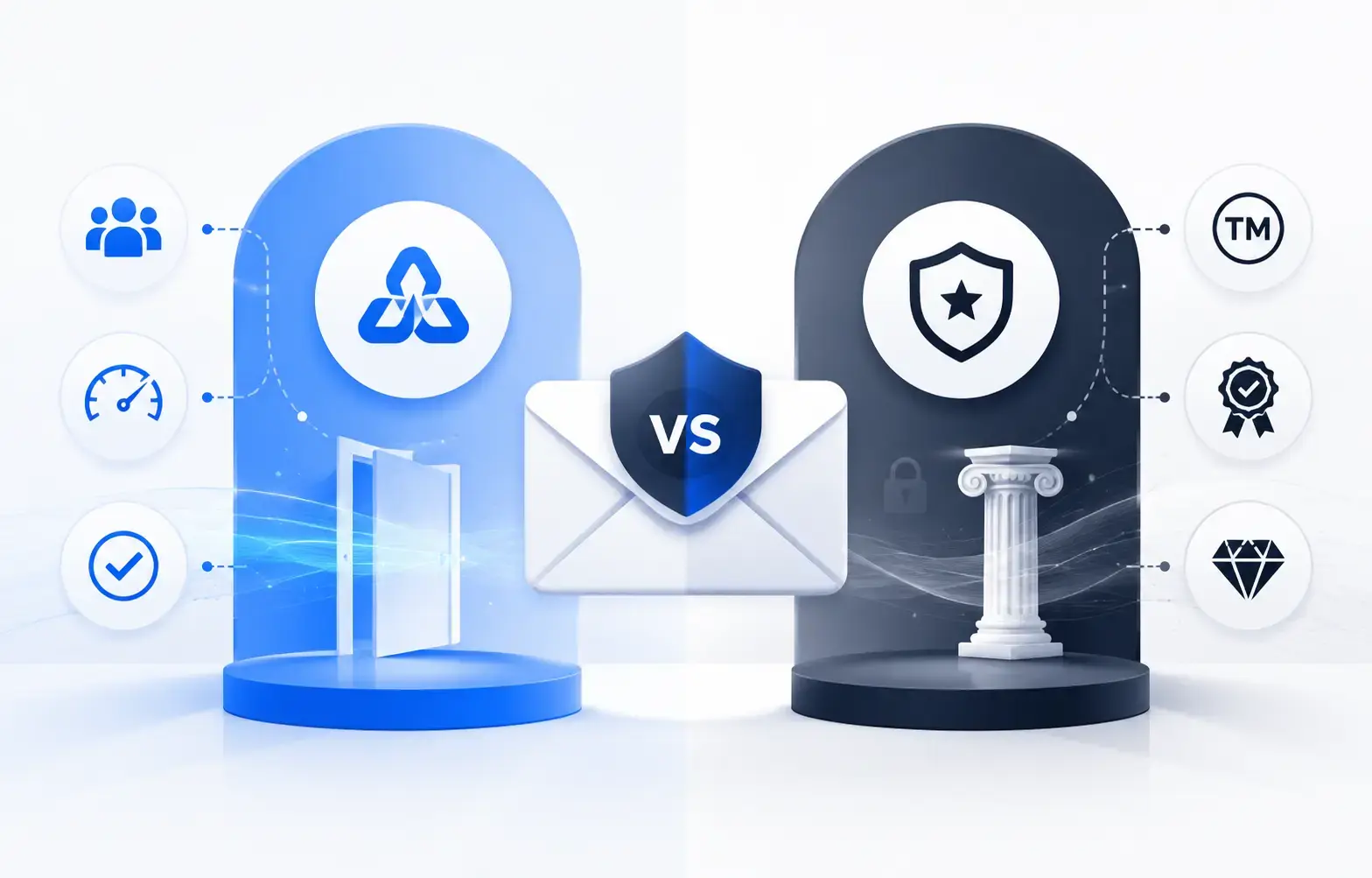
The Trademark Bottleneck: How Intellectual Property Law Shapes the Future of Email Security
Email security is no longer just a technical discipline. It’s becoming a legal one.
For decades, email authentication was purely technical: SPF, DKIM, DMARC.
No lawyers. No trademarks. No certificates. Then BIMI arrived.
And with it, VMC — a certificate that requires:
- a registered trademark,
- in a recognized jurisdiction,
- matching the exact logo used in email.
Suddenly, email security teams found themselves asking questions like:
- “Is our logo actually registered?”
- “In which jurisdiction?”
- “Does the trademark match the logo we use in marketing?”
- “When does it expire?”
- “Can we even get a VMC with this?”
Most companies don’t know the answers.
And that’s the bottleneck.
The legal system moves slowly — but email threats move fast
A DMARC policy can be deployed in days. A BIMI record can be published in minutes.
But a trademark registration?
- 3–6 months if everything goes well,
- longer if objections arise,
- much longer if the logo needs updating.
This mismatch creates a strange reality: your domain can be protected today, but your brand identity in the inbox cannot — not until the trademark office says so.
VMC forces brands to clean up their identity chaos
Most companies have:
- multiple logo versions,
- outdated trademark filings,
- inconsistent brand usage,
- expired registrations,
- logos registered only locally, not internationally.
VMC forces discipline. To get verified, a brand must have:
- one official logo,
- registered in a recognized jurisdiction,
- matching the exact artwork used in email,
- with a valid, active registration.
For many organizations, this is the first time marketing, legal, and security teams have ever collaborated on a single project — and it shows.
The trademark bottleneck is actually a good thing
It sounds like a hurdle — and it is — but it’s also a powerful filter. Only brands that:
- protect their identity,
- maintain their trademarks,
- invest in authenticity,
- take security seriously
…get the verified checkmark. This raises the bar for the entire ecosystem.
The future: trademark law becomes part of cybersecurity strategy
Brand protection will no longer be just a legal function — it will become a cybersecurity requirement. Companies will need to:
- register trademarks earlier,
- maintain them proactively,
- align brand identity with legal filings,
- treat trademark expiration as a security risk,
- integrate legal timelines into security roadmaps.
The organizations that understand this will move faster. The ones that don’t will be stuck waiting months for a logo — while attackers move in milliseconds.
Your logo is now part of your security perimeter
For the first time in history, a brand’s visual identity is tied directly to its email security posture. Your logo isn’t just a marketing asset anymore — it’s a security credential. And the trademark office, not your IT team, decides when your brand can be verified in the inbox.